Too Many Business Ideas? How to Stay Creative & Profitable
What if the very thing that inspired you to start your business is also making it difficult to grow?
I’m talking about your creativity.
If you’re a creative entrepreneur, chances are your biggest problem isn’t a lack of ideas.
Quite the opposite.
You have so many ideas. So many things you could create, share, teach, or help people with. And when inspiration strikes, you can practically see the finished result already.
Naturally, you want to bring it to life.
But there’s a challenge that comes with this kind of creativity: When you’re constantly following your inspiration, your business can become difficult for other people to understand.
I’ve experienced this myself. And I’ve come to realize that building a profitable business doesn’t necessarily require less creativity.
It requires learning how to give your creativity a direction.
In this article, I’m sharing five practical ways to create that balance.
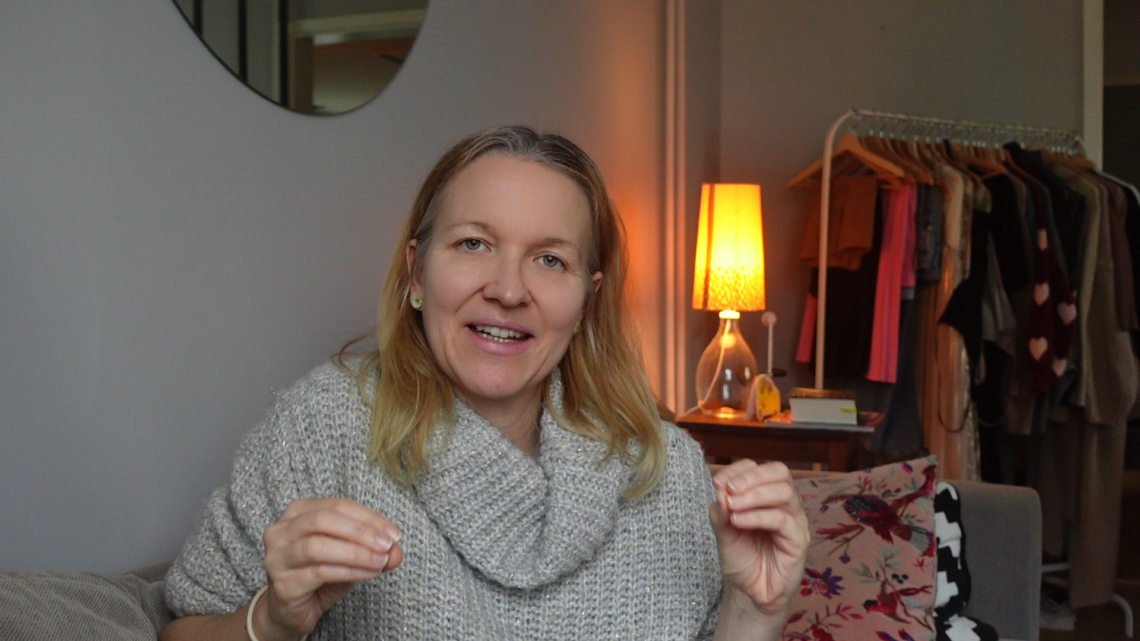
Prefer watching? In the video below, I explore the eternal creative entrepreneur’s dilemma and share how I’m navigating it in my own business.
1. Recognize the Difference Between Self-Expression and Service
This might be the most uncomfortable part of the conversation.
When we share whatever inspires us in the moment, we’re often prioritizing self-expression.
And there’s absolutely nothing wrong with that.
Creativity is joyful. It’s energizing. And sometimes, allowing ourselves to create without restrictions is exactly what we need to move out of stagnation.
But when we’re running a business, there’s someone else we need to consider.
The person on the other side.
The person who discovers our Instagram profile, visits our website, or encounters our content for the first time.
Can they understand what we do?
Do they recognize how we could help them?
Is it clear that we have something they can buy or book?
Or are we so busy sharing everything we’re passionate about that our actual offers get lost along the way?
The choice creative entrepreneurs need to make
We can prioritize unrestricted self-expression, or we can prioritize communicating our services clearly to potential clients.
Neither choice is inherently wrong.
There are even content creators who consciously choose to return to traditional employment because they want to enjoy their creativity without the pressure of having to earn an income from it.
That’s a perfectly valid choice.
The problem isn’t choosing self-expression. It’s making that choice unconsciously while hoping for the results of a business focused on serving its clients.
I see so many gifted creatives struggling with this, and it genuinely makes me sad because I see how much they have to offer.
But the good news is that choosing clarity doesn’t mean abandoning creativity.
It means finding the space where your creativity and your clients’ needs overlap.
2. Choose One Core Offer to Focus Your Business Around
If you have too many business ideas, choosing just one offer can feel incredibly restrictive.
You know you could help people with so many different things. Why would you limit yourself?
Here’s a different way to think about it:
Your core offer doesn’t have to be the only thing you ever do. It simply becomes the main entry point into your business.
When someone discovers you, they should be able to understand what you help people with.
Once they’ve entered your world, there may be other services or offers that are relevant to them.
But those don’t all need to compete for attention on your Instagram feed or website homepage.
How to choose your core offer
Here’s a question I find particularly helpful:
If one of my offers became incredibly successful, and suddenly everyone wanted to work with me on that particular thing, would I still enjoy delivering it?
And another:
Could I happily create content about this topic for months or even years?
Think about the nuance within that subject. The questions you could answer. The different perspectives you could explore.
Some offers might feel exciting occasionally but exhausting if they became your main focus.
Others might surprise you with how much creative possibility they contain.
Look for the offer that feels both valuable to your clients and expansive enough for you to keep exploring.
And remember: Choosing one offer to focus on now doesn’t mean abandoning everything else forever.
3. Create an Idea Bank Instead of Acting on Every Idea
If you’re anything like me, when you get an idea, you don’t just think about it.
You can almost feel the finished result.
And that makes you want to execute it immediately.
But this is also how our businesses can become diluted.
We create and publish one exciting idea after another, and eventually our audience may struggle to recognize the common thread.
So here’s a practice that can make a big difference:
Put a pause between idea and execution.
Instead of acting immediately, write the idea down.
Create an idea bank in Notion, your notes app, or wherever you enjoy collecting inspiration.
Then ask yourself:
- Does this idea support the offer I want to become known for?
- Will it help potential clients understand how I can help them?
- Does it demonstrate my expertise or communicate something relevant to my business?
If the answer is yes, wonderful! Go ahead and create it when the time is right.
If the answer is no, the idea can stay in your idea bank.
You don’t have to delete it.
You don’t have to abandon it.
It might become relevant for a future project, another offer, or people who are already deeper inside your business.
Not every good idea needs to become a project right now.
For a creative person, knowing that an idea has been safely collected can make it much easier to let go of the urgency to execute it immediately.
4. Reverse Your Creative Process
This is one of my favorite shifts for creating content that feels both inspiring and intentional.
Many creative entrepreneurs naturally follow this process:
Idea → Creation → How does this connect to my business?
An idea arrives, we get excited, we create something, and afterward we try to figure out how it relates to our offers.
Sometimes the connection is obvious. Sometimes it’s a stretch.
But what if we reversed that process?
Your offer → Relevant ideas → Creative inspiration → Content
Start with the service you want people to know you for.
Then brainstorm content ideas that could naturally lead people toward that service.
Ask yourself:
- What questions do my potential clients have?
- What problems are they trying to solve?
- What misconceptions might prevent them from recognizing the value of my offer?
- What could I share that helps them understand my expertise?
- What would help them decide whether working with me is right for them?
Don’t stop at the first idea.
Create a list of possibilities.
And then comes the part I love:
Choose the idea that genuinely excites you.
You’re still creating intuitively. You’re still following your inspiration.
But you’ve given your creativity a direction before you start.
This is how a content strategy can support your creativity rather than restrict it.
Being intentional doesn’t have to mean being rigid.
5. Use Visual Branding to Bring Everything Together
There’s another important piece of creating a recognizable business, particularly for creative entrepreneurs.
Your visual identity.
Because even when your messaging becomes clearer, the way you present your business visually influences how people experience it.
And research suggests that these impressions can happen remarkably quickly.
In a study published in 2006, researchers led by Gitte Lindgaard found that people could form initial judgments about a website’s visual appeal after viewing it for just 50 milliseconds — 0.05 seconds.
The researchers also found that these initial impressions were strongly related to judgments made after longer viewing times.
That’s not enough time to read and understand an entire offer. But it illustrates just how quickly people begin responding to what they see.
[Source: Lindgaard et al., 2006 — “Attention web designers: You have 50 milliseconds to make a good first impression!”]
Why visual consistency matters
Imagine someone discovering your Instagram profile.
They see posts about different aspects of your expertise, personal reflections, educational content, and perhaps a few offers.
Without a cohesive visual language, these different elements might feel disconnected.
But when you use consistent colors, typography, imagery, and graphic elements, you can create a recognizable visual identity that ties them together.
And you don’t necessarily need an entire rebrand to achieve that.
Sometimes your existing visuals simply need a little more intention and breathing room.
For example, you might:
- Choose a cohesive palette of three to five brand colors.
- Select two or three complementary fonts.
- Use imagery and graphic elements that reflect your business’s personality.
- Create more visual rhythm by alternating detailed graphics with simpler, calmer designs.
- Apply these elements consistently across your website and social media.
The goal isn’t to make everything look identical.
It’s to create a visual language that feels connected, recognizable, and authentic to your business.
A simple visual branding exercise
Take a look at your website or Instagram profile.
Try to see it through the eyes of someone discovering your business for the very first time.
Ask yourself:
What impression would someone get from this?
Does it feel calm, energetic, playful, sophisticated, nurturing, bold, or something else entirely?
And is that the feeling you want people to associate with your business?
Then ask:
Is it clear what I help people with?
And finally:
Do the different elements feel like they belong to the same brand?
You might discover that you don’t need to start from scratch.
You simply need to bring more intention to the visual expression of what is already there.
Creativity and Profitability Don’t Have to Be Opposites
I’m currently putting these principles into practice in my own business.
After allowing myself a period of creating very freely, I’ve decided to focus my content on one core offer: Vision to Visuals.
Not because it’s the only thing I can help people with.
But because I want to make it easier for the right people to recognize what I do and how I can help them.
And I’m learning that having a clear direction doesn’t necessarily make creativity less enjoyable.
It gives all those ideas somewhere meaningful to go.
So if you’ve been struggling with too many business ideas, constantly changing direction, or feeling restricted by traditional content strategies, I hope this gives you a different perspective.
You don’t have to choose between being creative and building a profitable business.
But you do need to become intentional about how your creativity serves the people you want to help.
And that can be a creative process in itself.
Bring Your Business Vision to Life with Vision to Visuals
In Vision to Visuals, I help heart-led solopreneurs connect with the deeper vision, values, and personality behind their business and translate these into a cohesive visual identity.
It’s not just about choosing attractive colors or fonts.
We explore what makes your business yours: your mission, the people you’re here to serve, and the feeling you want your brand to communicate.
Through a collaborative process of discovery, visual inspiration, and refinement, we create a visual direction that reflects the essence of your business.
You’ll receive a personalized Brand Style Guide that gives you a consistent visual foundation for your content, website, and other brand touchpoints.
And if you’d like to discuss your project first, you’re welcome to book a free 30-minute discovery call.


You May Also Like

You’re Doing the Inner Work. You Know the Strategy. What Comes Next for Your Business Growth?

Untangling my self-worth from my business | Note from Self week 37